What is it
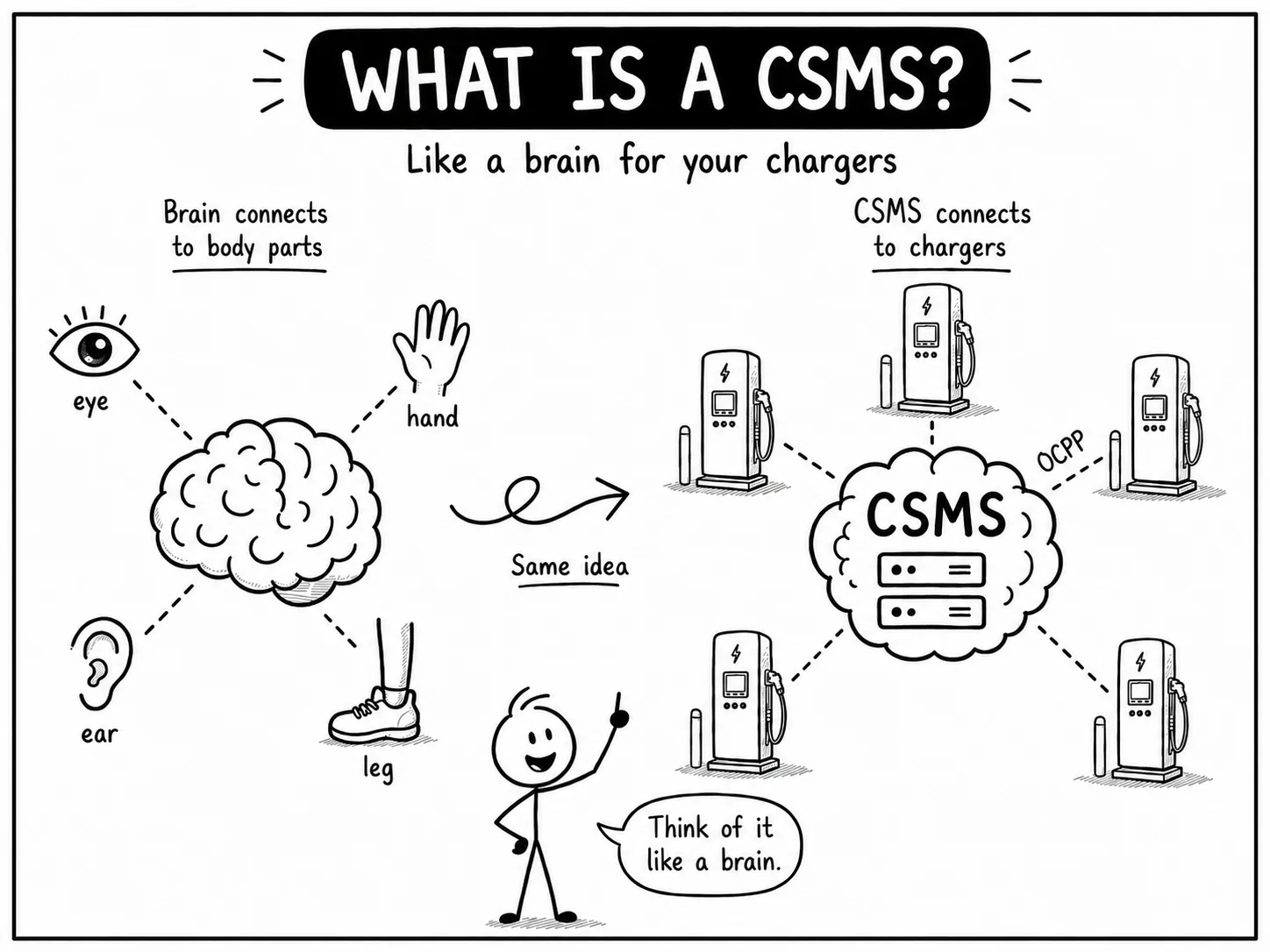
A CSMS (Charging Station Management System) is a backend system, often running in the cloud, that charging stations connect to. Each charging station maintains a persistent connection to the CSMS and regularly reports its status. This lets the CSMS know when a charger is online, when it’s down, what firmware it’s running, and what model it is.
A charging station on its own is just a box that delivers electricity. The CSMS is what turns it into a managed, networked device that can verify users, process payments, and be controlled remotely.
What it does
The CSMS handles everything the charger can’t do on its own. It verifies whether a driver is authorized to charge. It tracks session data, how much energy was delivered, for how long, and at what cost, and uses that to generate bills. It enables firmware updates to hundreds of chargers remotely without sending a technician. It monitors charger health in real time, flagging errors and downtime. It can remotely start or stop sessions, adjust power limits, or take a charger out of service for maintenance.
The charger and the CSMS communicate using a protocol called OCPP (Open Charge Point Protocol). OCPP defines every message between the two, what the charger reports, what the CSMS can command, and the rules for how they interact. You can read more about What is OCPP.
Who uses it
The CPO needs a way to manage their chargers across an entire network. The CSMS gives them a dashboard where they can see every charger they operate, which ones are online, which are in use, which have errors, how many sessions each one has completed, and what revenue each site generates.
Without a CSMS, monitoring a charger means visiting it in person. If you have 10,000 chargers deployed across the country, that means 10,000 site visits. A CSMS connected to those 10,000 chargers lets you manage them all from a single screen.